Unlocking the Charm of a Cute Monkey Sitting: Safari Animal with Character
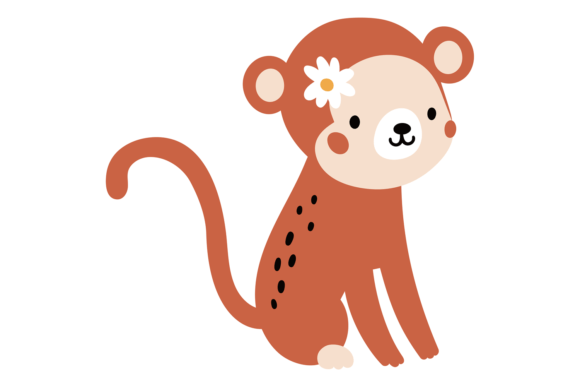
There’s something immediately captivating about a cute monkey sitting. It’s a pose that suggests curiosity, playfulness, and a hint of mischief—all qualities that can inject life into a creative project. When we talk about a safari animal with such distinct personality, we’re not just describing an illustration; we’re talking about a versatile design asset. This particular cute monkey sitting. safari animal with a long tail, isolated on a white background in formats like EPS and JPG, is more than just clip art. It’s a character waiting to tell a story in your next branding campaign, editorial layout, or product packaging.
The Visual Appeal: More Than Just a Cute Face
Let’s break down what makes this asset so effective. First, the isolation on a white background is a practical godsend. It means the monkey can be dropped into any context—whether you’re designing a logo design for a children’s boutique, crafting social media graphics for a wildlife blog, or creating packaging design for an organic snack brand—without messy background removal eating up your time. The long tail adds a dynamic element; it can be used to frame text, guide the eye, or simply add a whimsical flourish to your layout.
The style leans into a modern typography sensibility, even though it’s an illustration. Its clean lines and friendly expression align with contemporary design trends that favor approachable, human-centric branding. Think of it as a creative font for visual storytelling—where the “letterforms” are the monkey’s posture and expression. It communicates warmth, intelligence, and playfulness without a single word.
Where This Safari Animal Shines: Practical Applications
This isn’t just for kids’ projects. A cute monkey sitting can elevate a range of professional work. For entrepreneurs and small business owners, it can become the cornerstone of a brand identity—think of a mascot for a tech startup that wants to seem clever and agile, or a cafe that prides itself on being a “third place” for community. The asset’s versatility means it works in both digital and print realms: from website headers to business cards, from editorial design in magazines to merchandise like t-shirts or mugs.
For marketers and content creators, the image is a engagement tool. A blog post about creativity or problem-solving could use the monkey as a visual metaphor for “monkeying around” with ideas. On social media graphics, it stops the scroll—it’s relatable, memorable, and highly shareable. Designers and crafters will appreciate the EPS format for scalability in large-format prints, while the JPG is perfect for quick digital mockups.
Integrating the Asset: Font Pairing and Design Harmony
While it’s an illustration, treating it like a display font in your layout can yield great results. Its personality is bold and expressive, so it pairs best with more neutral, structured typefaces. Consider using it alongside a clean sans serif font for body text to let the monkey’s character stand out without overwhelming the viewer. For projects that need a touch of elegance, a simple serif font can create a sophisticated contrast—imagine a safari-themed wedding invitation where the playful monkey is balanced with classic typography.
The key is font pairing principles applied visually. The monkey asset has a lot of “x-height” and personality, so your accompanying type should have a lower visual weight. Avoid pairing it with other highly decorative or script font styles, as that could create visual clutter. Instead, think of it as your premium font—the star of the show that needs supporting actors in the form of complementary colors, whitespace, and readable text.
Making It Work for Your Project: A Practical Guide
Before you download and start designing, ask yourself a few questions. Does the monkey’s playful tone align with your project’s message? A financial advisory firm might not be the best fit, but a pet store, a children’s educational platform, or a creative agency would be perfect. Test the asset in context: place it in your web design mockup or print layout to see how it interacts with your color palette and other design assets.
Always check the licensing. Since this is a commercial font (in the sense of a commercial illustration asset), ensure the license covers your intended use—whether for a client’s logo design or for merchandise you plan to sell. Formats matter: use the EPS for editable vectors in Adobe Illustrator, and the JPG for presentations or quick social media posts.
Finally, don’t be afraid to modify. If the monkey’s tail doesn’t quite fit your layout, a skilled designer can adjust it in the vector file. The goal is to use this safari animal with personality to create a connection with your audience. It’s a tool for audience engagement, a way to make your brand perception more friendly and memorable. In a world of generic stock imagery, a well-chosen, character-driven asset like this can set your project apart, adding a layer of professionalism and recognition that resonates.